The Odemira Commercial and Creative District, officially presented
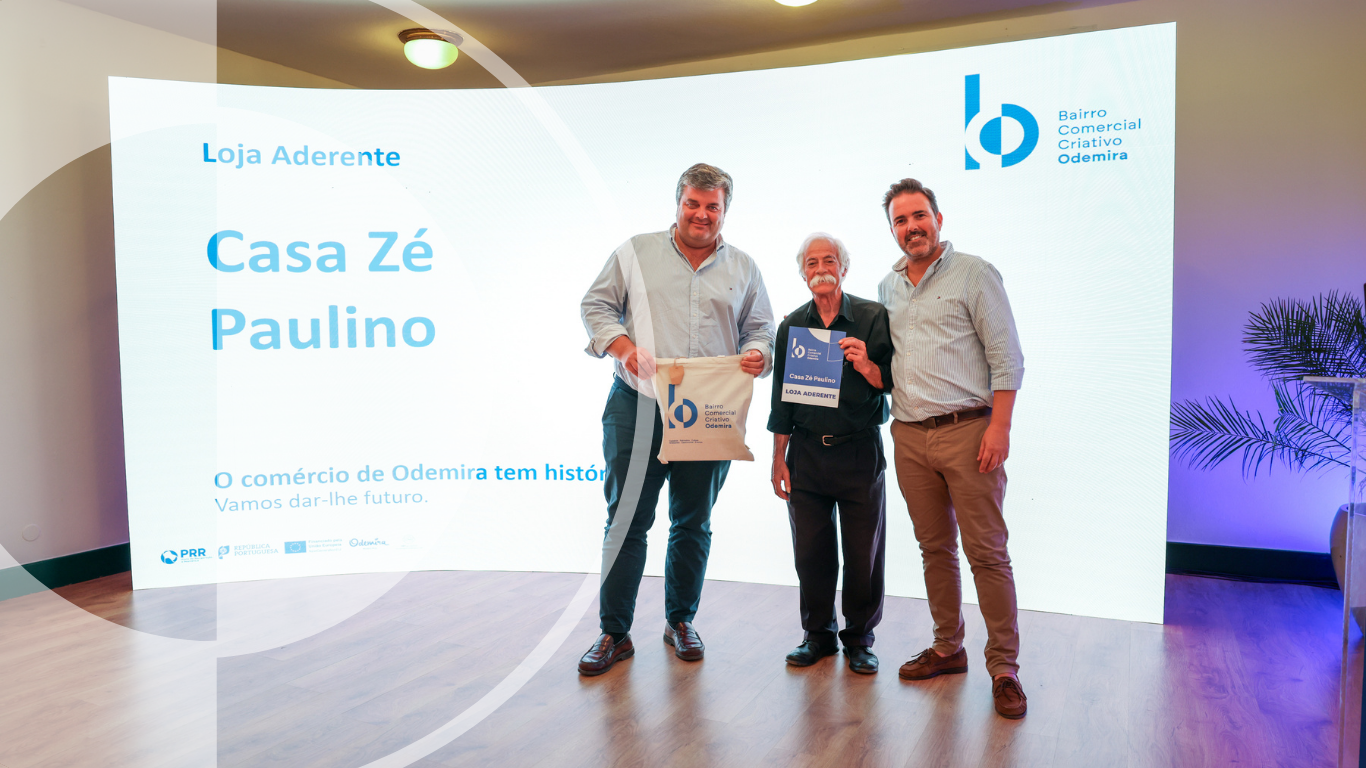
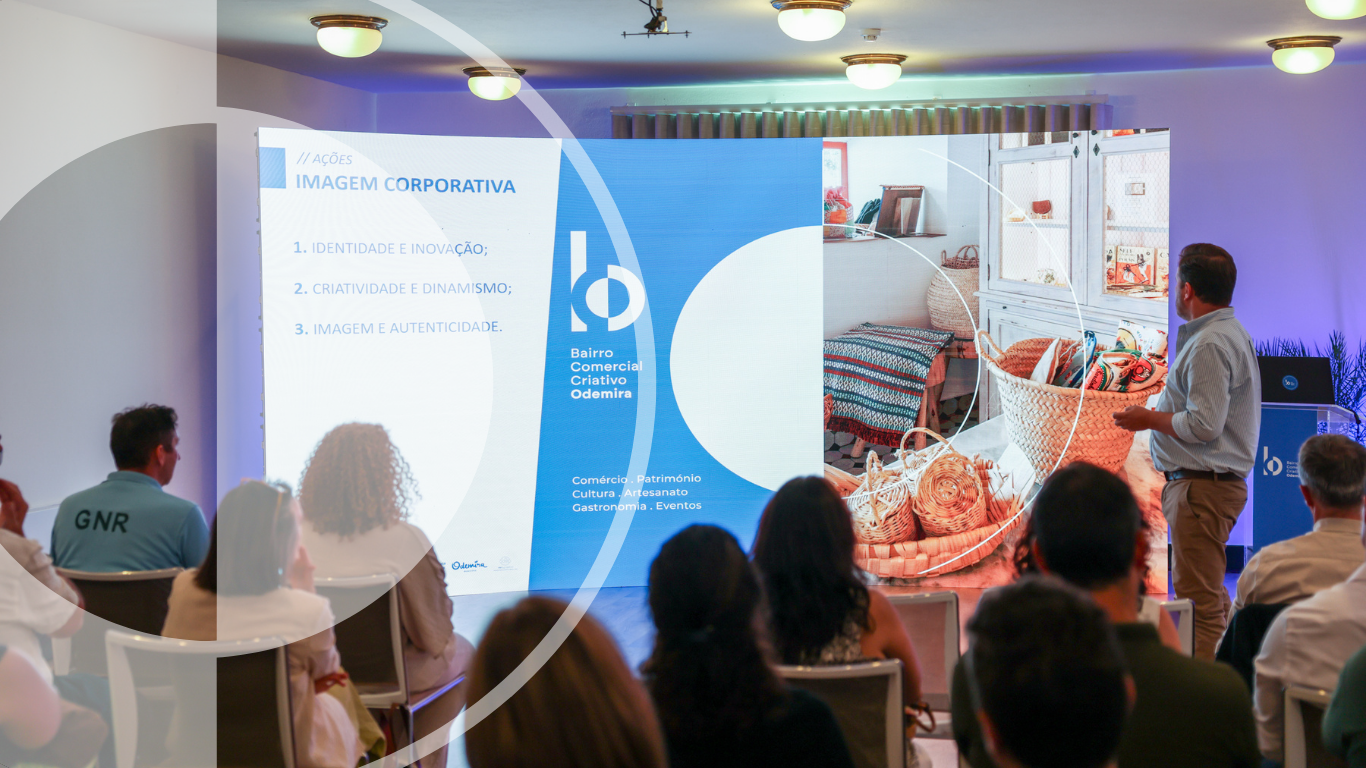
Two sessions – one institutional, one for the shopkeepers – set out what the Bairro is, what is already in place, and where it wants to go.
On October 16, the José Saramago Municipal Library in Odemira hosted the presentation of the Odemira Commercial and Creative District (BCCO), in two sessions: an institutional one at 2 p.m. in the auditorium, and a second at 7 p.m. for local shopkeepers.
The Mayor of Odemira, Hélder Guerreiro, opened both sessions, and Deputy Mayor Ricardo Cardoso presented the project. Also speaking were the president of NERBE/AEBAL, David da Costa Simão, and the District Manager, João Mira.
What was presented
The starting idea fits into a single sentence, the same one that opens the presentation: Digital doesn’t replace the store. It brings more people to it.
The Odemira Commercial and Creative District covers the town’s historic core, its main shopping streets, and the riverside area, across some 6 hectares (about 15 acres). Of the 94 businesses in the area, 46 have already joined the project and 24 are present on the marketplace.
The project is organized around five goals: to modernize local commerce and raise its profile; to revitalize the urban space and build community; to improve the shopping experience; to increase opportunities and strengthen the local economy; and to give shopkeepers digital skills and greater competitiveness.
On the digital side, the Bairro has a marketplace, two digital kiosks, a digital locker available 24 hours a day for sending and collecting orders, free public Wi-Fi at 14 points around town, augmented reality guides accessible by QR code, and real-time parking information.
In the public space, the presentation highlighted the sustainable street furniture, with solar chargers, and the totems and signs identifying participating businesses, alongside the urban regeneration of the town center.
Promotion includes a visual identity of its own, a dedicated communication plan, billboards, a special edition of TimeOut magazine, merchandising, and promotional videos, among others.
The total investment is €710,840.88, funded 100% by Portugal’s Recovery and Resilience Plan (PRR).